
When the first hint of spring breezes through the window, I often find myself daydreaming of a delightful dessert that dances between creamy and airy—a Japanese cheesecake. Imagine the soft, pillowy texture and the gentle aroma of freshly baked vanilla wafting through your kitchen. This recipe is a game-changer, transforming simple ingredients into a showstopper that impresses both family and friends alike.
What I love most about this Japanese cheesecake recipe is how easy it is to create that dreamy, jiggly masterpiece, all while keeping your kitchen stress-free. Whether you’re looking to elevate your afternoon tea or need a crowd-pleaser for your next gathering, this lightweight dessert truly fits the occasion. With endless variations—from matcha infusions to chocolate swirls—every bite is an invitation to explore your creativity. So, gather your ingredients, and let’s embark on a culinary journey that’s all about flavor, joy, and a sprinkle of Japanese inspiration!

Why is Japanese Cheesecake Recipe a Must-Try?
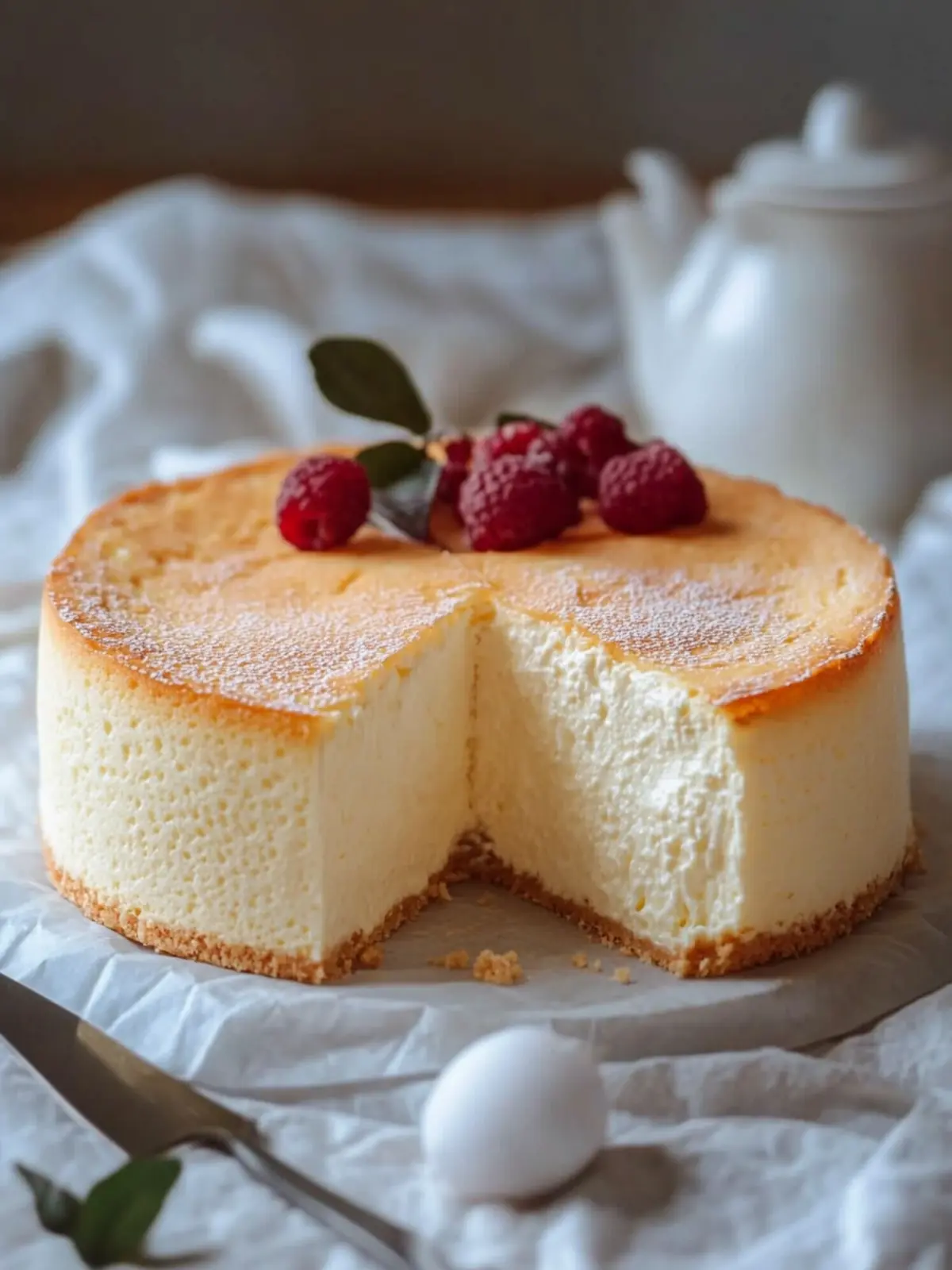
Fluffy texture: This recipe delivers a light and airy sensation that melts seamlessly in your mouth.
Easy to make: With straightforward steps, you’ll whip up this exquisite dessert without any fuss.
Flavor variations: From matcha to chocolate swirl, personalize your cheesecake with delightful twists for every palate.
Perfect for gatherings: Impress your friends and family with a stunning dessert that’s both elegant and crowd-pleasing.
Make-ahead friendly: Easily prepare this cheesecake in advance, allowing flavors to deepen and textures to perfect.
Make your next dessert a memorable one with this Japanese cheesecake recipe, and don’t forget to check out more delightful dessert ideas that will enchant your guests!
Japanese Cheesecake Recipe Ingredients
For the Batter
- Cream Cheese – Provides tangy richness; make sure it’s softened to room temperature for smooth mixing.
- Eggs (6 large) – Offers structure and stability; separate the yolks and whites for meringue.
- Whole Milk (0.5 cup) – Adds moisture and creaminess; slightly warm before use for an even blend.
- Unsalted Butter (0.33 cup) – Enhances richness; melt before incorporating for a seamless batter.
- Cake Flour (0.5 cup) – Provides that light texture; sift it twice to remove any lumps.
- Cornstarch (2 tablespoons) – Adds stability to the cake structure; don’t skip this essential ingredient.
- Salt (0.25 teaspoon) – Enhances the overall flavor profile of your cheesecake.
- Granulated Sugar (0.67 cup) – Sweetens the cheesecake while helping to stabilize the meringue; divided usage is key.
- Lemon Juice (1 tablespoon) – Adds brightness to balance the richness of the cream cheese.
- Vanilla Extract (1 teaspoon) – Infuses aromatic notes for a delightful fragrance.
- Cream of Tartar (0.25 teaspoon) – Stabilizes the egg whites for a perfect meringue.
For the Pan
- Butter (1 tablespoon) – Essential for greasing the pan; ensures easy release after baking.
Make this Japanese cheesecake recipe a standout at your next gathering with these precisely chosen ingredients!
How to Make Japanese Cheesecake
-
Preheat the oven to 320°F (160°C). Prepare your 8-inch round springform pan by lining the bottom with parchment paper and wrapping the outside with foil; this is essential for the water bath.
-
Melt the cream cheese and butter together in a medium saucepan over low heat until smooth and creamy. Remove from heat and whisk in the warm milk, egg yolks, vanilla, and lemon juice until well combined.
-
Sift the cake flour, cornstarch, and salt into the cream cheese mixture. Gently fold with a spatula until everything is combined and smooth, taking care not to overmix.
-
Whip egg whites in a clean bowl, adding cream of tartar. Gradually sprinkle in the sugar, continuing to beat until stiff peaks form; this will give your cheesecake its wonderful airy structure.
-
Fold the whipped egg whites into the cream cheese mixture in three additions, being careful to retain as much air as possible for that delicate texture.
-
Bake in the preheated oven using a water bath method for 70–75 minutes. The top should be golden brown, and the center will be jiggly but set.
-
Cool the cheesecake in the oven with the door cracked for 30 minutes. Then, let it cool at room temperature for another hour before transferring to the fridge to chill for at least 4 hours or overnight for the best texture and flavor.
Optional: Dust the top with powdered sugar or add fresh fruit for a lovely garnish before serving.
Exact quantities are listed in the recipe card below.
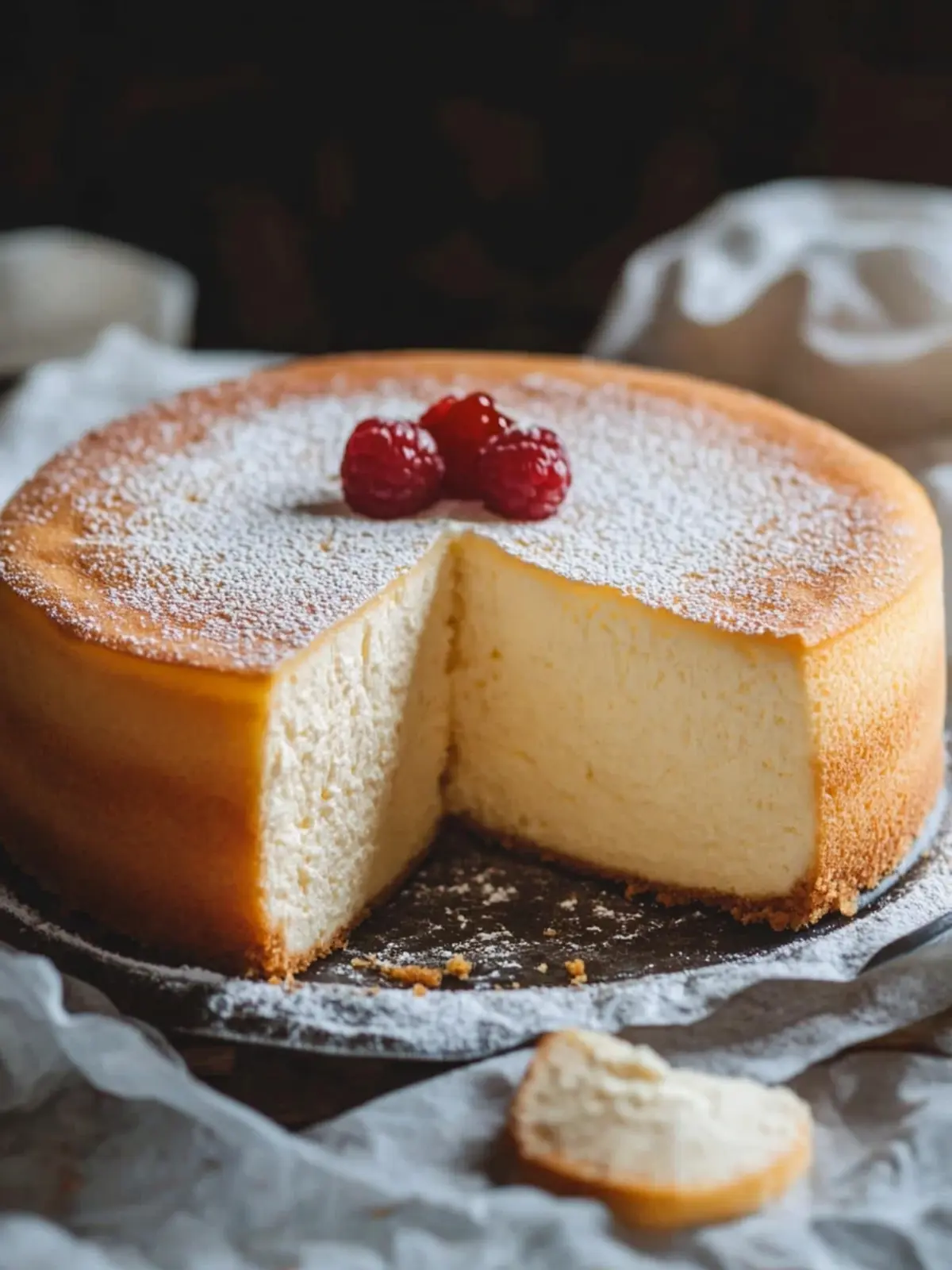
How to Store and Freeze Japanese Cheesecake
Fridge: Store your Japanese cheesecake covered in the refrigerator for up to 5 days. This will help maintain its delightful creamy texture and flavor.
Freezer: Wrap individual slices tightly in plastic wrap and then in aluminum foil to prevent freezer burn. They can be frozen for up to 2 months.
Thawing: To enjoy frozen cheesecake, transfer it to the fridge and allow it to thaw overnight for the best texture. Should you be impatient, you can let it sit at room temperature for about an hour.
Reheating: Avoid reheating the cheesecake, as it is best enjoyed chilled. However, if you wish, serve slices slightly warmed by letting them sit out for 15 minutes before serving.
What to Serve with Japanese Cheesecake?
Add a touch of joy to your dessert experience with these delightful pairings.
- Fresh Berries: The tartness of raspberries or strawberries cuts through the creaminess, enhancing each bite with a burst of flavor.
- Matcha Tea: Serve alongside this classic Japanese tea for a soothing pairing that complements the cheesecake’s delicate sweetness.
- Whipped Cream: A light dollop of fresh whipped cream adds a creamy texture that enhances the airy feel of the cheesecake.
- Coconut Milk Ice Cream: This dairy-free alternative brings a tropical vibe and balances the cheesecake’s richness with its light, refreshing taste.
- Chocolate Ganache: Drizzling a thin layer of rich chocolate ganache elevates the dessert with a decadent twist, perfect for chocolate lovers.
- Roasted Nuts: A sprinkle of toasted almonds or walnuts adds a delightful crunch, providing contrast to the soft texture of the cheesecake.
- Mint Tea: A warm cup of mint tea refreshes the palate, making it a lovely beverage choice to serve alongside your sweet delight.
- Honey Drizzle: A light drizzle of honey on top can introduce an enticing sweetness that harmonizes beautifully with the cheesecake’s flavors.
Expert Tips for Japanese Cheesecake Recipe
-
Room Temperature Ingredients: Ensure your cream cheese and eggs are at room temperature. This helps the batter blend smoothly, enhancing the final texture of the cheesecake.
-
Grease-Free Bowls: When whipping egg whites, use clean, grease-free bowls to avoid compromising their volume. Any fat will prevent stiff peaks from forming.
-
Water Bath Importance: Don’t skip the water bath! It creates steam, ensuring even baking and preventing cracks in your Japanese cheesecake. Always add boiling water to your roasting pan.
-
Gentle Folding: Carefully fold the meringue into the cream cheese mixture in three additions. This technique preserves air, which is key to achieving that light and fluffy texture.
-
Cool Gradually: Allow your cheesecake to cool slowly in the oven with the door slightly open. This prevents sudden temperature changes that can lead to collapsing.
Japanese Cheesecake Recipe Variations
Embrace the delightful opportunity to personalize your Japanese cheesecake! Each twist adds an exciting new layer of flavor and creativity.
-
Matcha Twist: Sift 2 tablespoons of matcha powder with the cake flour for a vibrant green hue. This adds a subtle earthy flavor and an eye-catching look.
-
Chocolate Swirl: Melt your favorite chocolate and gently swirl it into the batter before baking for a rich, decadent treat. Each bite brings a satisfying surprise.
-
Lemon Zest Burst: Add 1-2 teaspoons of fresh lemon zest to the batter for an uplifting, zesty kick. It perfectly balances the richness of the cream cheese.
-
Mini Cheesecakes: Pour the batter into muffin tins to create individual cheesecakes. Bake them for about 25-30 minutes, and enjoy these adorable, portable desserts at gatherings!
-
Dairy-Free Option: Substitute cream cheese with a dairy-free cream cheese alternative and use almond milk instead of whole milk. This keeps the texture creamy while accommodating dietary preferences.
-
Gluten-Free Version: Swap cake flour for a gluten-free blend made specifically for baking. This allows everyone to savor a slice without gluten anxieties.
-
Spicy Kick: Mix in a pinch of cayenne pepper or chili powder for an unexpected heat that contrasts beautifully with the cheesecake’s creaminess.
-
Caramel Drizzle: Drizzle with homemade or store-bought caramel sauce before serving for a sweet, buttery finish that will impress any crowd.
Make Ahead Options
These Japanese cheesecakes are perfect for meal prep and can make your life so much easier! You can prepare the cheesecake batter up to 24 hours in advance; simply store it in an airtight container in the refrigerator. If you want to take it a step further, bake the cheesecake ahead of time and allow it to cool completely, then wrap it tightly in plastic wrap and refrigerate for up to 3 days. To maintain its delightful texture, avoid cutting it until you’re ready to serve. When you’re set to enjoy, simply let it come to room temperature for about 30 minutes before slicing. You’ll have a jiggly, flavorful cheesecake that feels just as fresh as the day it was made!
Japanese Cheesecake Recipe FAQs
What type of cream cheese should I use for Japanese cheesecake?
For the best results, use full-fat cream cheese, as it provides a nice balance of richness and tanginess. Make sure it’s softened to room temperature for easy blending, which results in a smoother batter.
How long can I store Japanese cheesecake in the refrigerator?
You can store your Japanese cheesecake covered in the refrigerator for up to 5 days. Be sure to keep it well-wrapped to avoid absorbing any other fridge odors and to preserve its delightful texture.
Can I freeze Japanese cheesecake?
Absolutely! To freeze, wrap individual slices tightly in plastic wrap followed by aluminum foil to prevent freezer burn. They can be frozen for up to 2 months. When you’re ready to enjoy, thaw them overnight in the fridge for the best results.
What should I do if my cheesecake cracks during baking?
If cracks form, don’t worry! This can happen, especially if there’s a rapid change in temperature. To prevent this in the future, always bake using a water bath, and ensure gradual cooling by letting it sit in the oven with the door ajar for about 30 minutes after baking.
Is there a low-sugar version of this Japanese cheesecake?
Yes! You can reduce the sugar by substituting some or all with alternatives, like erythritol or stevia. Just keep in mind that this may slightly alter the texture and flavor, so experiment to find the right balance that works for you.
What variations can I try with this recipe?
Feel free to get creative! Some popular variations include adding matcha powder for a green tea twist, mixing in cocoa powder for a chocolate version, or incorporating citrus zest for a refreshing touch. Each variation adds a unique flavor profile while keeping the fluffy structure intact.
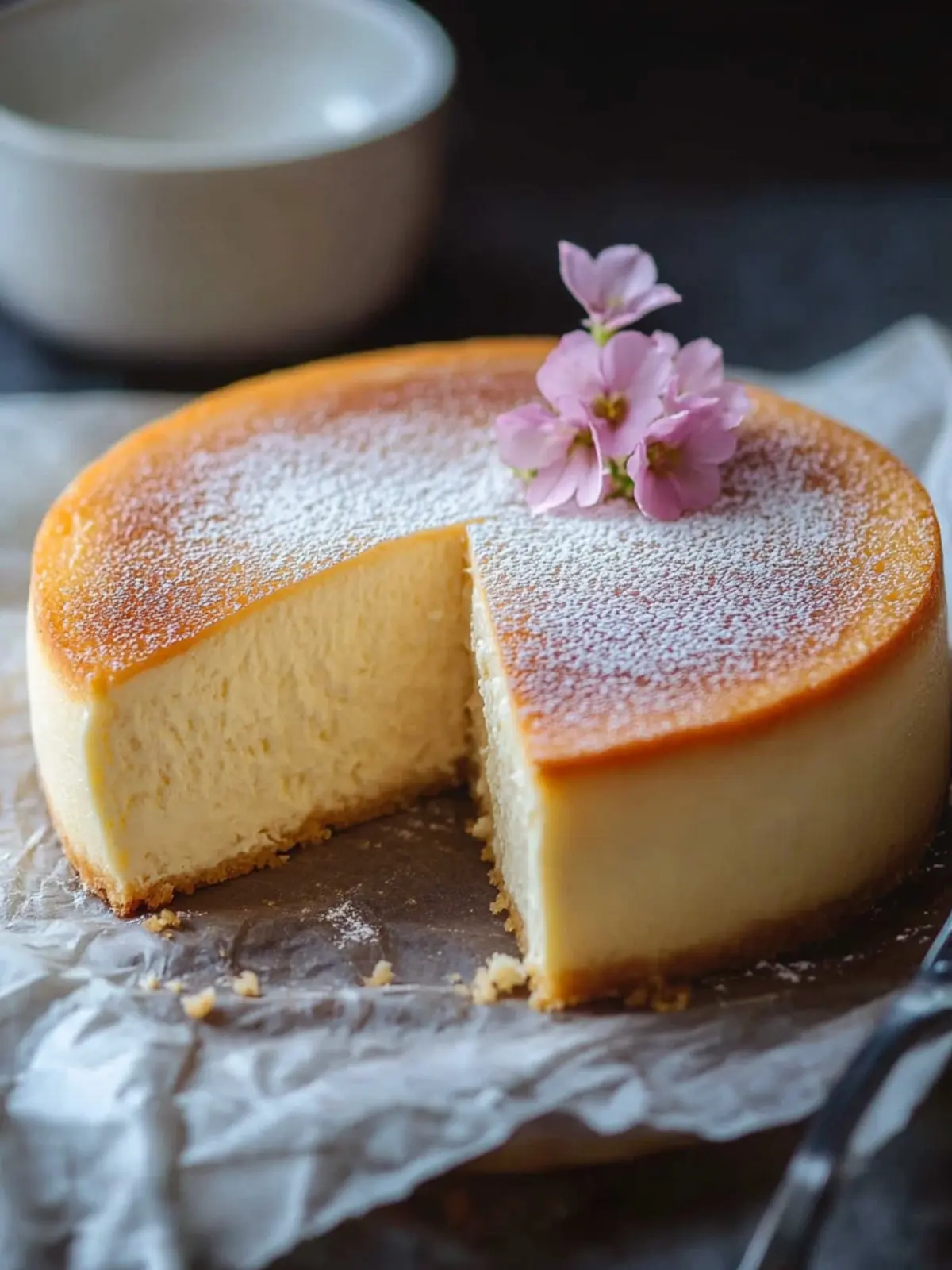
Fluffy Japanese Cheesecake Recipe: Light, Creamy Bliss Awaits
Ingredients
Equipment
Method
- Preheat the oven to 320°F (160°C). Prepare your 8-inch round springform pan by lining the bottom with parchment paper and wrapping the outside with foil.
- Melt the cream cheese and butter together in a medium saucepan over low heat until smooth and creamy. Remove from heat and whisk in the warm milk, egg yolks, vanilla, and lemon juice until well combined.
- Sift the cake flour, cornstarch, and salt into the cream cheese mixture. Gently fold with a spatula until combined.
- Whip egg whites in a clean bowl, adding cream of tartar. Gradually sprinkle in the sugar, continuing to beat until stiff peaks form.
- Fold the whipped egg whites into the cream cheese mixture in three additions, being careful to retain as much air as possible.
- Bake in the preheated oven using a water bath method for 70–75 minutes.
- Cool the cheesecake in the oven with the door cracked for 30 minutes, then let cool at room temperature for another hour before refrigerating.