
As the sun starts to shine and flowers bloom, the thought of a festive dessert often dances in my mind. Last Easter, I found myself craving something truly special, something that could capture the spirit of spring while also delighting my taste buds. That’s when I decided to whip up a Pineapple Coconut Carrot Cake, a creation that effortlessly marries the tropical sweetness of pineapple and coconut with the warm familiarity of classic carrot cake.
With each slice, you’ll find a moist, fluffy texture that melts in your mouth, all while complementing the bright and inviting flavors of the season. Topped with a light and airy pineapple coconut mousse frosting, this cake not only serves as a delicious centerpiece for your celebrations but also evokes feelings of sunshine and joy. Whether you’re hosting an Easter gathering or simply want to add a touch of the tropics to your day, this cake promises to impress and satisfy everyone at the table!
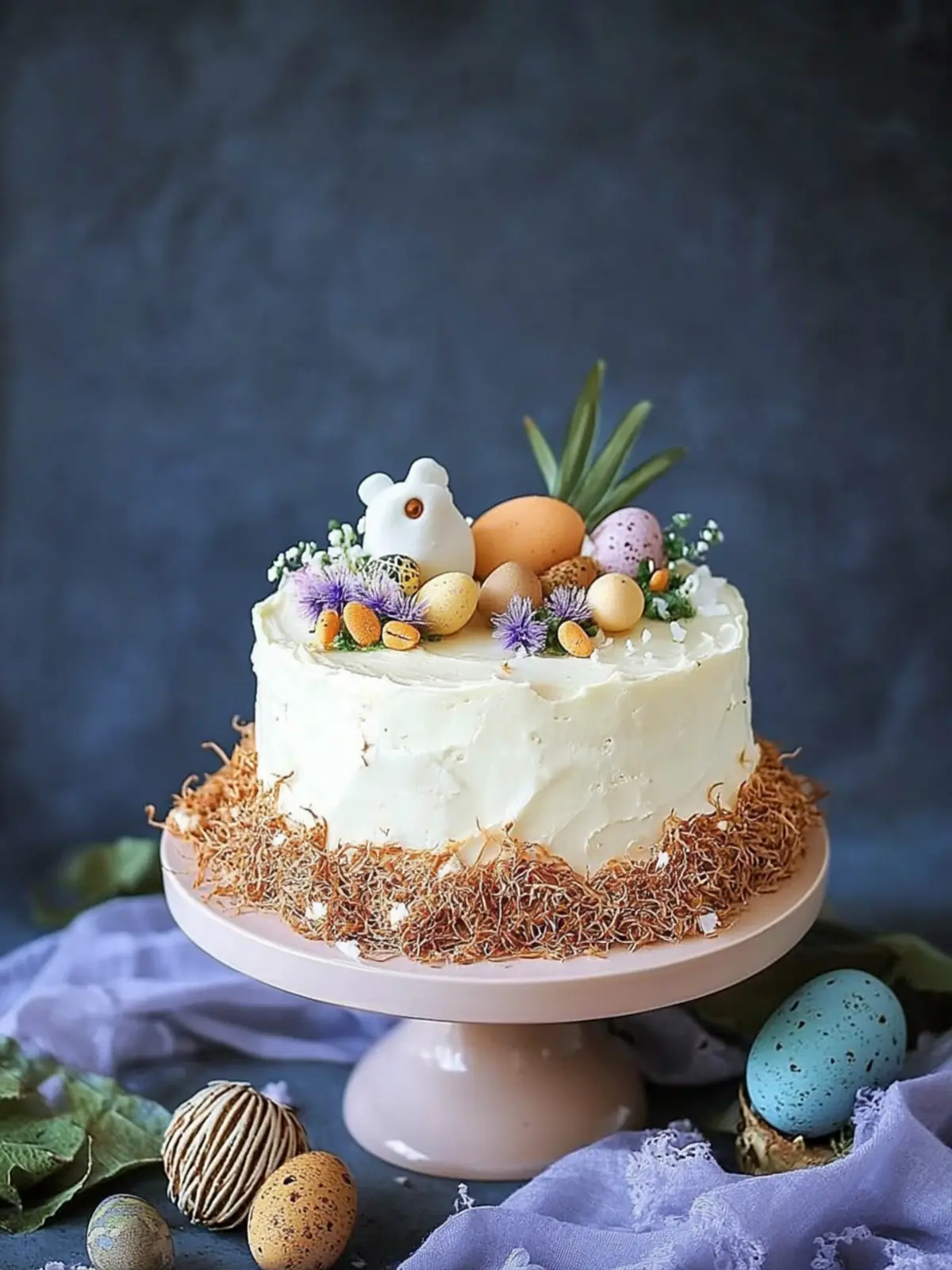
Why Love This Easter Bonnet Cake?
Easter Bonnet – Pineapple Coconut Carrot Cake is the perfect celebration dessert that will wow your guests and leave them asking for seconds!
- Tropical Twist: Combining the flavors of pineapple and coconut creates an exciting burst of sweetness that elevates classic carrot cake.
- Moist & Fluffy: The texture is incredibly light and fluffy, making every bite a delightful experience.
- Easy to Make: With simple steps, you can impress everyone without spending hours in the kitchen—ideal for busy celebrations.
- Visual Appeal: The cake is not just delicious but beautifully presented, making it the centerpiece of your spring festivities.
- Versatile Variations: Feel free to play around with different spices or fruit toppings to suit your taste! For more delectable ideas, check out variation suggestions for added inspiration.
Easter Bonnet – Ingredient Highlights
-
For the Cake
-
Pineapple Juice Concentrate – Adds natural sweetness and tropical flavor; substitute with fresh pineapple juice if desired.
-
Carrots – Provide moisture, sweetness, and texture; use finely grated fresh carrots for the best results.
-
Coconut (shredded) – Adds texture and a hint of tropical flavor; unsweetened shredded coconut can be used for less sweetness.
-
All-Purpose Flour – Forms the structure of the cake; can be replaced with a gluten-free blend for gluten-free options.
-
Baking Powder – Leavening agent to help the cake rise; ensure it’s fresh for proper leavening.
-
Pumpkin Pie Spice & Ginger – Enhance the spice profile of the cake; ground cinnamon can be used as an alternative.
-
Granulated Sugar – Provides sweetness; reduce quantity to lower sweetness if desired.
-
Brown Sugar – Adds moisture and a deeper flavor; can substitute with additional granulated sugar.
-
Eggs – Bind the ingredients and add richness; for egg-free versions, try flax eggs.
-
Vegetable Oil – Keeps the cake moist; melted coconut oil works beautifully for added flavor.
-
For the Mousse Frosting
-
Cream Cheese – Base for the mousse frosting, providing creaminess and tang; vegan cream cheese can be a substitute for dairy-free options.
-
Coconut Cream – Adds richness and enhances the coconut flavor; use full-fat coconut milk with solids for a similar effect.
-
Gelatin Sheets – Helps set the mousse frosting; vegetarians can use agar-agar as a substitute.
-
For Decorating
-
Matcha Powder – For decoration, adding visual appeal and a touch of earthy flavor; optional but highly recommended.
-
Toasted Coconut Flakes – Adds crunch and enhances the coconut taste; sprinkle generously on top for extra flair.
This Easter Bonnet – Pineapple Coconut Carrot Cake is bound to be a hit at your next celebration, showcasing vibrant flavors and delightful textures!
How to Make Pineapple Coconut Carrot Cake
-
Prepare Pineapple Pudding: Begin by processing and simmering pineapple juice concentrate with cornstarch until it thickens, then refrigerate this mixture until cold and set.
-
Cake Preparation: Preheat your oven to 350°F. In one bowl, mix the dry ingredients, and in another, blend the finely grated carrots and shredded coconut with sugars. Once combined, add in the eggs and vegetable oil, and mix until just incorporated.
-
Bake: Pour your batter evenly into prepared cake pans. Bake for 25-30 minutes or until golden brown and a toothpick comes out clean. Let cool completely before frosting.
-
Make Mousse Frosting: Soak the gelatin sheets in cold water. Combine it with the cooled pineapple pudding and cream cheese, then gently fold in whipped coconut cream for a light and airy frosting.
-
Assemble Cake: Place one layer of the cake in a mold, spread a generous layer of the mousse frosting, then add the second cake layer on top. Refrigerate the assembled cake until the mousse is set.
-
Decorate: Carefully remove the cake from the mold, dust the top with matcha powder for a pop of color, and finish off by sprinkling toasted coconut flakes and optionally adding chocolate eggs for a festive touch.
Optional: Add edible flowers for an extra decorative touch.
Exact quantities are listed in the recipe card below.
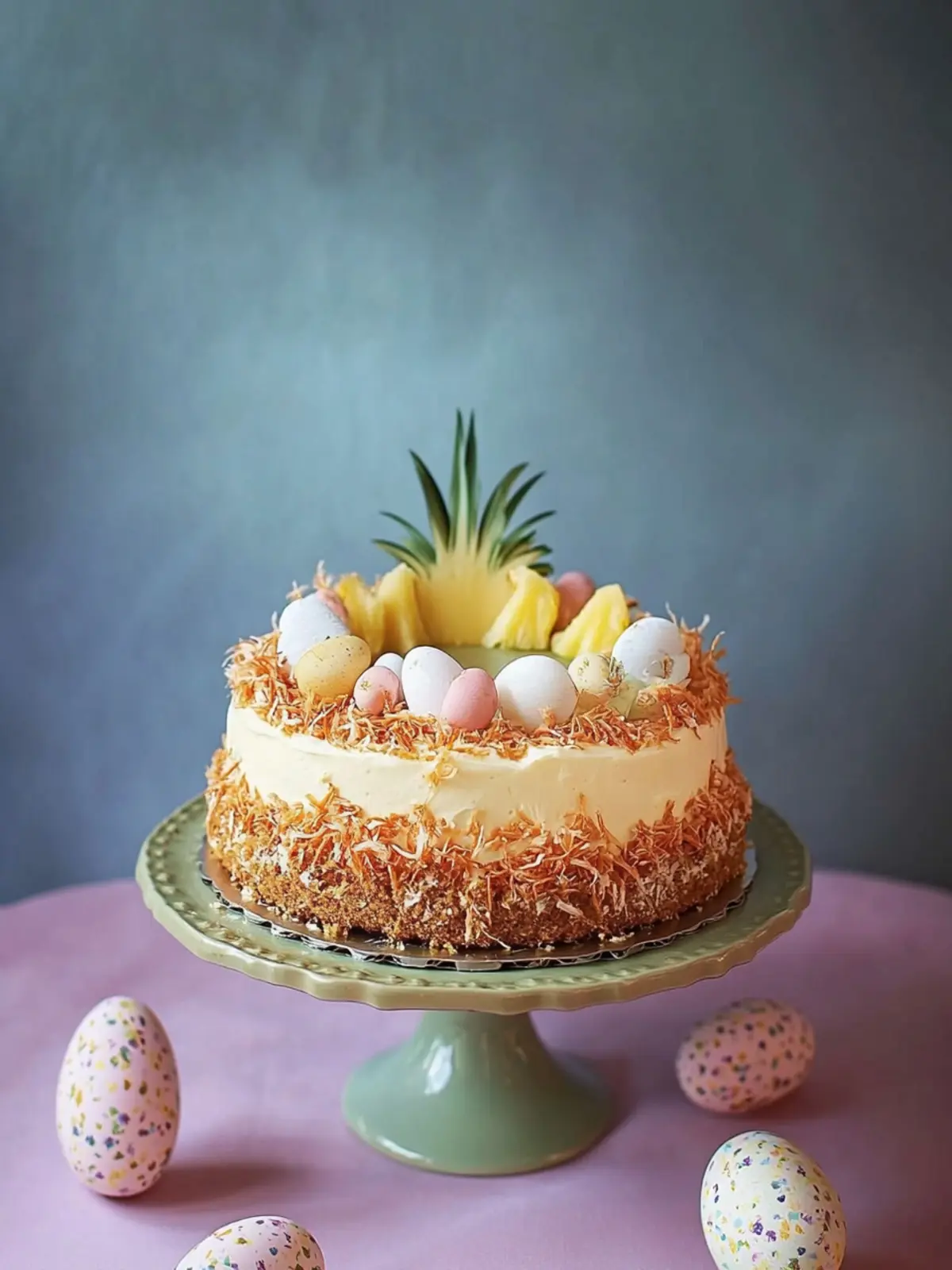
Easter Bonnet – Variations & Substitutions
Feel free to play with this recipe to create your perfect version of this joyful cake!
- Zucchini Swap: Replace shredded carrots with finely grated zucchini for a unique twist and added moisture that keeps the cake light and delicious.
- Mango Delight: Substitute pineapple with ripe mango for a sweet and tropical flair that delights the palate while still keeping the cake moist.
- Nutty Texture: Incorporate chopped walnuts or pecans instead of coconut for a delightful crunch. These nuts add depth and a rich flavor contrast to the cake’s softness.
- Gluten-Free: Use a gluten-free baking blend in place of all-purpose flour, allowing everyone to enjoy this sweet creation without sacrificing taste or texture.
- Coconut Flour Boost: Substitute a portion of the all-purpose flour with coconut flour for added coconut flavor and moisture; simply adjust liquid ingredients slightly.
- Spicy Kick: Add a pinch of cayenne pepper or chili powder to the batter for an unexpected zing. The heat beautifully complements the tropical sweetness!
- Fruit Medley: Top your cake with a lovely mix of fresh tropical fruits like kiwi, banana, or strawberries for a bright, colorful finish and cooler freshness.
- Flavored Extracts: Experiment with flavored extracts such as almond or vanilla to enhance the overall aroma and taste of your cake, giving it a unique personality!
Make Ahead Options
These make-ahead options for the Easter Bonnet – Pineapple Coconut Carrot Cake are perfect for busy home cooks looking to simplify their meal planning! You can prepare the cake layers up to 24 hours in advance; simply bake, cool completely, and wrap them tightly in plastic wrap to maintain their moisture. Additionally, the mousse frosting can be made and refrigerated for up to 3 days; just be sure to keep it in an airtight container. When you’re ready to serve, layer the mousse between the cooled cakes, allow it to set in the fridge, and decorate right before your gathering. By prepping ahead, you’ll save time and ensure your cake is just as delicious and delightful when serving!
What to Serve with Pineapple Coconut Carrot Cake?
Looking to create a delightful spread alongside your cake that echoes those tropical, springtime vibes?
-
Tropical Fruit Salad: A colorful mix of fresh fruits like mango, kiwi, and berries provides a refreshing palate cleanser that complements the cake’s sweetness.
-
Coconut Macaroons: These chewy, coconut-packed treats offer a crunchy contrast and enhance the cake’s coconut flavor, making for a delightful duo on your dessert table.
-
Lemonade Spritzers: Light and bubbly, these drinks add a zesty touch to your meal, balancing the cake’s richness with a refreshing citrus kick.
-
Whipped Cream: A dollop of lightly sweetened whipped cream on the side enhances the cake’s tropical flavors. It gives a light, creamy texture that works beautifully with each slice.
-
Chocolate-Covered Strawberries: These decadent bites add a touch of elegance and their slightly tart flavor contrasts nicely with the moist cake, making both elements shine.
-
Coconut Ice Cream: Creamy and rich, this ice cream is a wonderful accompaniment. The coconut flavor ties the elements together, elevating your dessert experience to new tropical heights.
-
Tea or Coffee: A warm cup of your favorite brew adds a comforting touch, enhancing the overall enjoyment of dessert while bringing out the cake’s subtle spices and flavors.
How to Store and Freeze Easter Bonnet Cake
-
Room Temperature: You can keep the cake at room temperature for up to 2 days, but it’s best stored in an airtight container to maintain moisture.
-
Fridge: Store leftover cake in the refrigerator for up to a week. Keep it covered to avoid drying out the moist layers of the pineapple coconut carrot cake.
-
Freezer: For longer storage, freeze the cake without frosting for up to 3 months. Wrap each layer tightly in plastic wrap or aluminum foil, followed by an airtight container.
-
Reheating: When ready to enjoy, thaw the cake in the refrigerator overnight. Reheat slices gently in the microwave for about 15-20 seconds, just until warm, and then enjoy!
Expert Tips for Easter Bonnet Cake
-
Ingredient Temperature: Ensure all ingredients are at room temperature for better mixing and a light, fluffy texture in your Easter Bonnet cake.
-
Avoid Overmixing: Mix the batter until just combined to prevent a dense cake; this ensures your cake remains moist and fluffy.
-
Check Doneness: Use a toothpick or cake tester inserted into the center; it should come out clean when the cake is perfectly baked.
-
Mousse Frosting Consistency: If you prefer a looser frosting for your Easter Bonnet cake, adjust the gelatin ratio to achieve your desired consistency.
-
Layering Technique: When assembling your cake, ensure that each layer of mousse is spread evenly for a beautiful, professional finish.
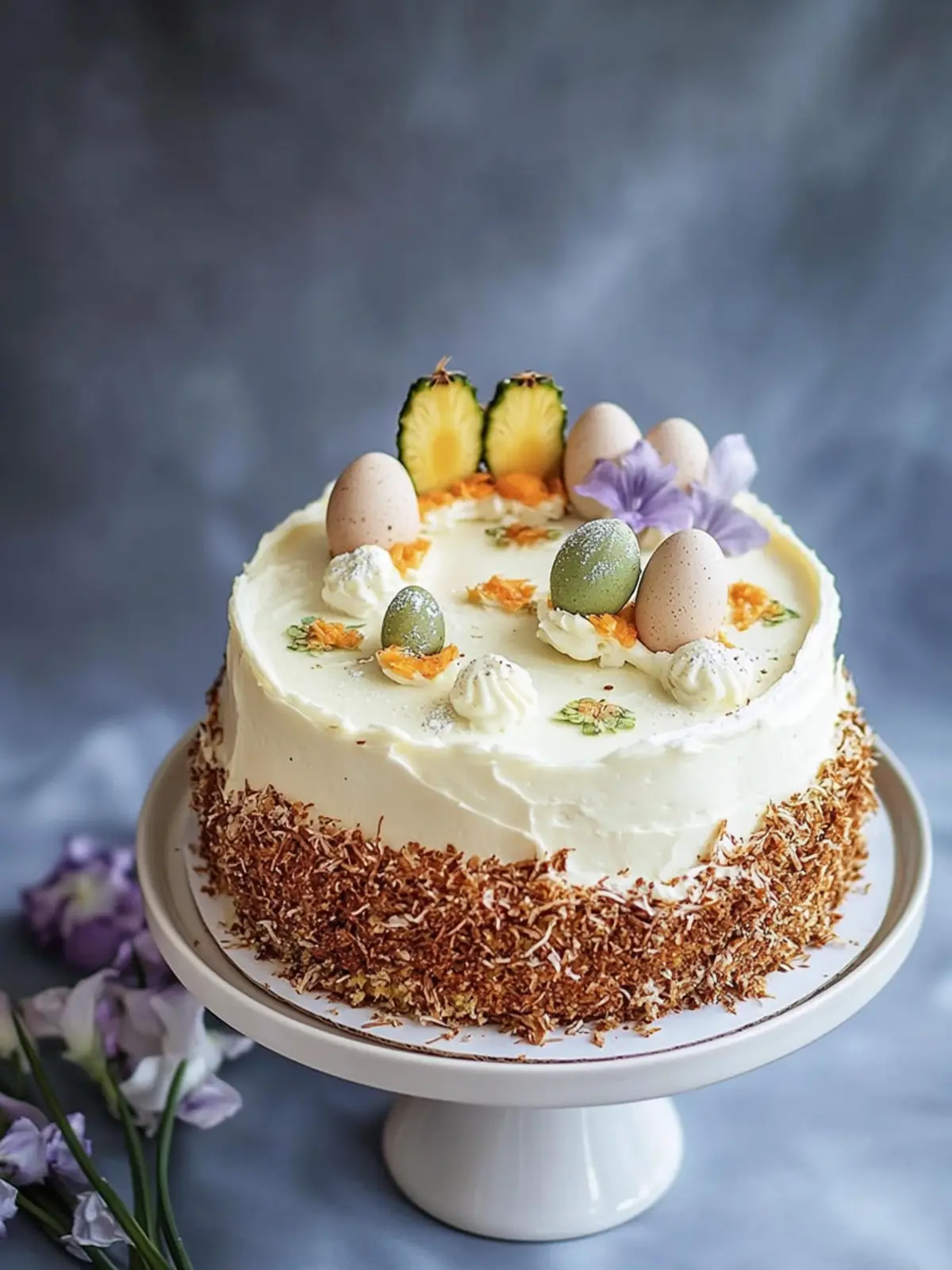
Easter Bonnet – Pineapple Coconut Carrot Cake Recipe FAQs
What type of pineapple juice should I use?
Absolutely! You can use pineapple juice concentrate, which adds amazing natural sweetness and tropical flavor. If you prefer, fresh pineapple juice is also a lovely substitute, offering a brightness that enhances the cake.
How should I store the cake after baking?
You’ll want to keep your cake at room temperature for up to 2 days in an airtight container to maintain moisture. For longer storage, pop it in the fridge where it can last for up to a week. Just be sure to keep it covered to retain its delightful texture.
Can I freeze the Pineapple Coconut Carrot Cake?
Very! To freeze, I recommend storing the cake without frosting for up to 3 months. Wrap each layer tightly in plastic wrap or aluminum foil, then place them in an airtight container. When you’re ready to enjoy, thaw the layers in the refrigerator overnight.
What if my cake turns out too dense?
If you find your cake dense, it may be due to overmixing the batter. Always mix until just combined to keep that lovely lightness. Also, ensure your baking powder is fresh to provide the right lift while baking.
Are there any allergies or dietary considerations to keep in mind?
Definitely! For those with egg allergies, you can substitute eggs with flax eggs—simply mix 1 tablespoon of ground flaxseed with 3 tablespoons of water, let it sit for 5 minutes, and it will work as a binder. Additionally, vegans can use dairy-free alternatives for cream cheese and the icing. Always double-check labels to ensure safety!
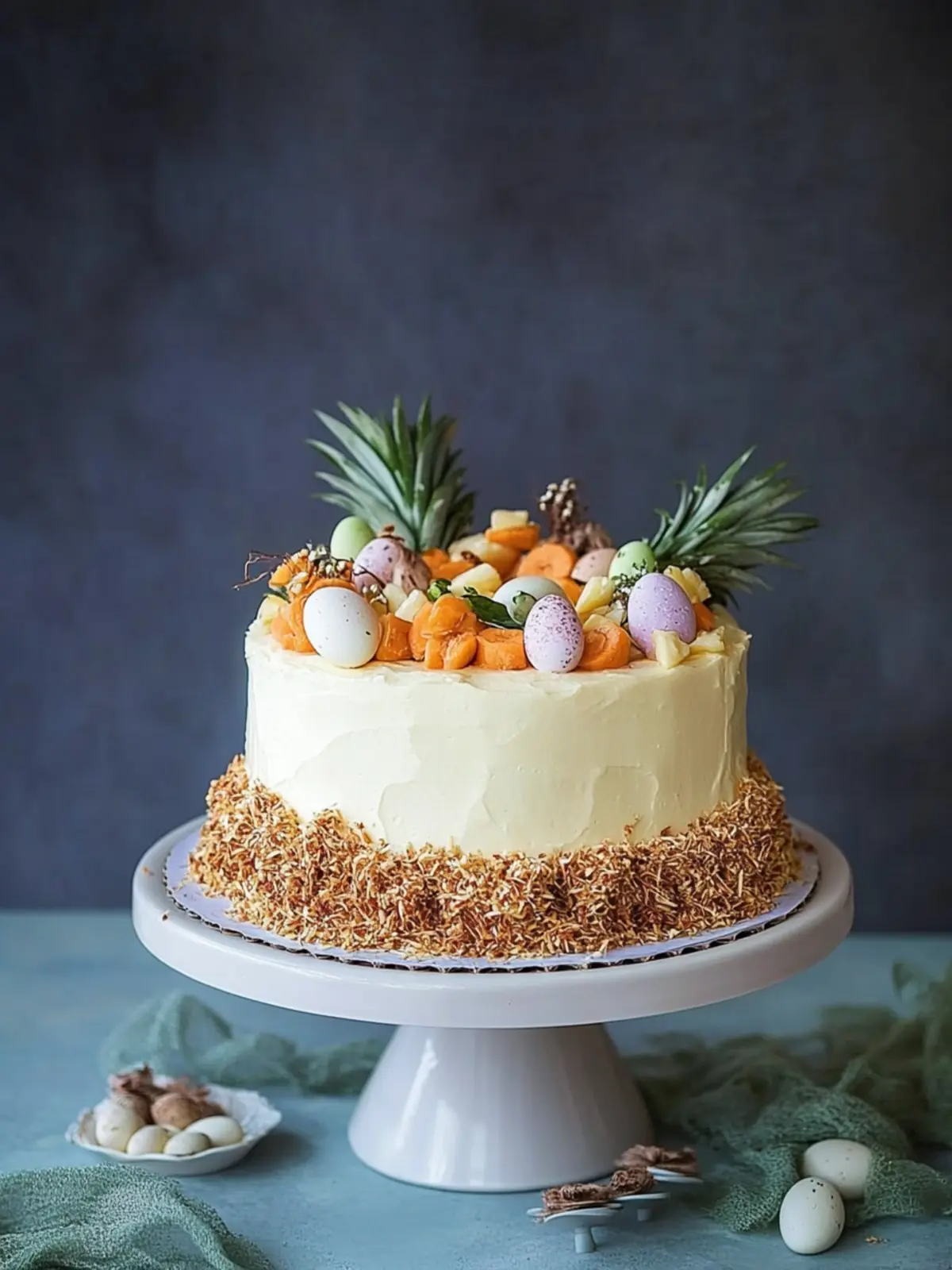
Easter Bonnet – Pineapple Coconut Carrot Cake for Spring Joy
Ingredients
Equipment
Method
- Prepare Pineapple Pudding by processing and simmering pineapple juice concentrate with cornstarch until it thickens, then refrigerate until cold.
- Preheat oven to 350°F. In one bowl, mix dry ingredients, in another, mix grated carrots, shredded coconut, and sugars. Add eggs and oil, and mix until just incorporated.
- Pour batter into prepared pans. Bake for 25-30 minutes or until golden brown and a toothpick comes out clean. Let cool completely.
- Soak gelatin sheets in cold water. Combine with cooled pineapple pudding and cream cheese, then fold in whipped coconut cream.
- Place one layer of cake in a mold, spread a layer of mousse frosting, then add the second cake layer. Refrigerate until mousse is set.
- Dust top with matcha powder, sprinkle toasted coconut flakes, and optionally add chocolate eggs.