
There’s something undeniably soothing about the act of making homemade custard. Picture this: a gentle simmer on the stove, the sweet scent of vanilla wafting through the kitchen, as rich egg yolks and creamy milk magically transform into a velvety pastry cream. This delightful homemade custard recipe not only comes together in under 30 minutes, but it also serves as a versatile component for your favorite desserts. Whether you’re dolloping it into pastries or layering it in a trifle, the silky texture and comforting warmth of this custard elevate any sweet treat.
What’s more, you can easily customize this classic recipe to suit your taste—imagine zesty lemon custard or a creamy dairy-free version made with almond milk. So let’s dive in and explore the simple joy of crafting a luscious custard that will impress both your family and friends, transforming everyday occasions into something truly special. Get ready to rediscover the magic of homemade desserts!
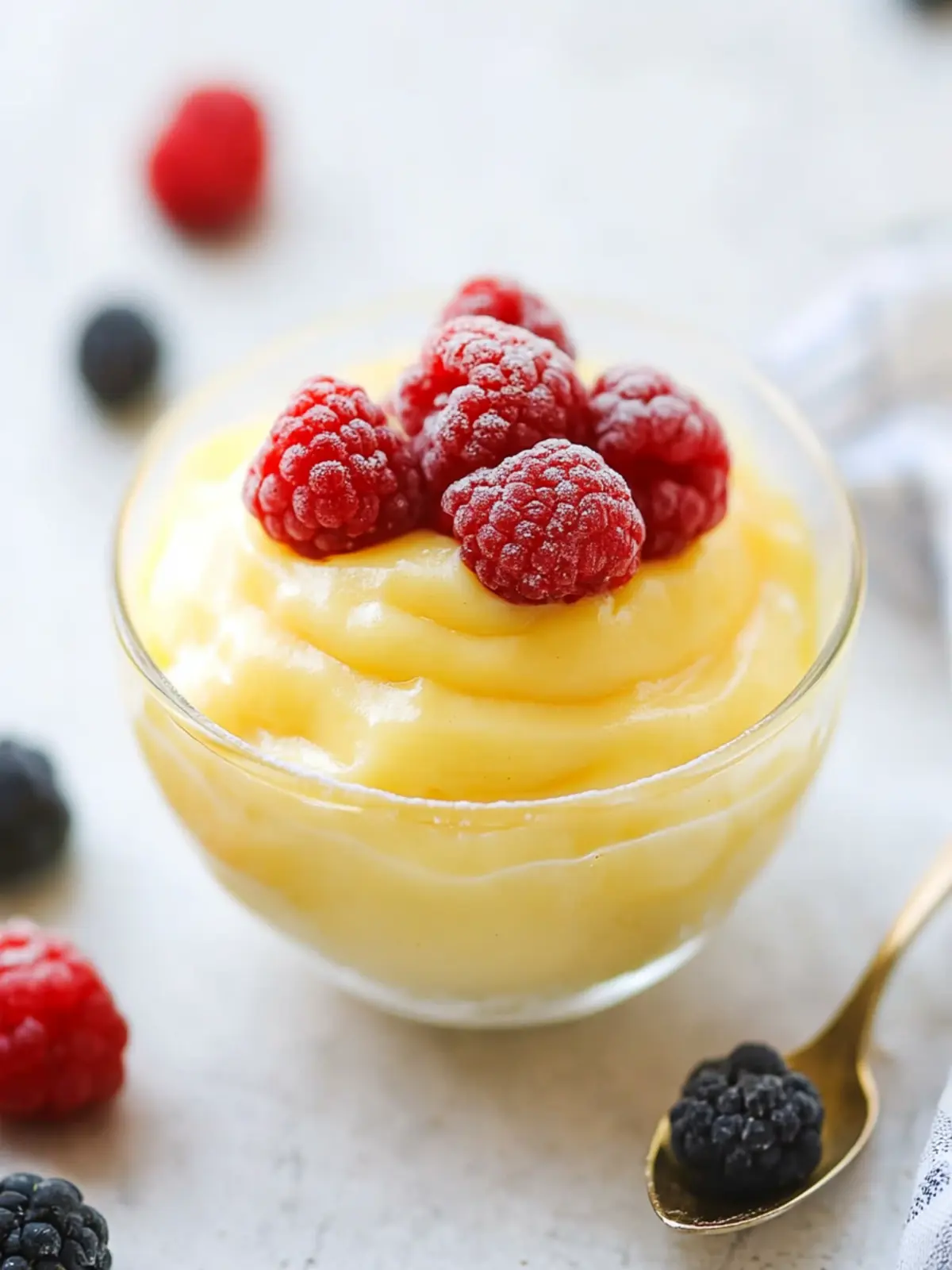
Why is Homemade Custard Recipe a Must-Try?
Versatile and Customizable: This homemade custard recipe adapts beautifully! Whether you prefer a rich vanilla flavor or a refreshing lemon twist, the possibilities are endless.
Quick and Easy: Prepare this delightful dessert in under 30 minutes, making it perfect for busy weekdays or last-minute gatherings.
Crowd-Pleasing Delight: Serve it up for family dessert night or impress guests at your next dinner party—everyone loves the silky texture!
Health-Conscious Options: With variations like dairy-free and gluten-free custard, you can cater to various dietary needs without sacrificing flavor.
Elevates Any Dish: Use it as a sumptuous filling for pastries, trifles, or even layer it in cakes for that extra touch of indulgence. Let’s dive in and create a memorable dessert!
Homemade Custard Ingredients
For the Custard Base
• Egg Yolks – Essential for thickening and richness; use large yolks for best texture.
• Whole Milk – Provides a creamy base; consider substituting with half cream for a richer flavor.
• Sugar – Adds sweetness; feel free to reduce by up to 1/4 cup for a lighter touch.
• Cornstarch – Acts as a thickening agent for the perfect silky texture; choose pure cornstarch for a gluten-free homemade custard recipe.
• Vanilla Extract – Infuses delicious flavor; a vanilla bean is a fantastic aromatic alternative.
For Extra Creaminess
• Unsalted Butter – Adds a rich finish; omit for a lighter custard if desired.
• Salt (optional) – A pinch enhances flavor; balance it for a more rounded taste.
Whether you’re preparing a classic vanilla version or experimenting with exciting variations, these ingredients will set the foundation for your homemade custard delights!
How to Make Homemade Custard
-
Combine Ingredients: In a medium saucepan, mix whole milk with half of the sugar. Heat gently over medium heat until just below boiling; then reduce to low, allowing the sweetness to dissolve.
-
Whisk Together: In a separate bowl, whisk together the remaining sugar, cornstarch, and egg yolks until smooth. This creates a creamy foundation for your custard.
-
Temper the Eggs: Gradually pour the hot milk mixture into the yolk mixture, whisking constantly. This step ensures that your eggs won’t scramble, keeping your custard silky.
-
Cook the Mixture: Return the blended mixture back to the saucepan. Over medium heat, continuously stir for 3-5 minutes, until the custard thickens and reaches about 185°F.
-
Finish and Flavor: Remove from heat and stir in unsalted butter and vanilla extract until well combined. The butter adds a luscious touch, making it truly indulgent.
-
Strain If Desired: For an ultra-smooth texture, strain the custard through a fine mesh sieve into a bowl. Place plastic wrap directly on the surface to prevent a skin from forming while cooling.
-
Cool Down: Allow the custard to reach room temperature before refrigerating. Chill until you’re ready to use it, ensuring it’s perfectly set and ready to serve.
Optional: Garnish with fresh berries or a sprinkle of cinnamon for an extra delicious touch.
Exact quantities are listed in the recipe card below.
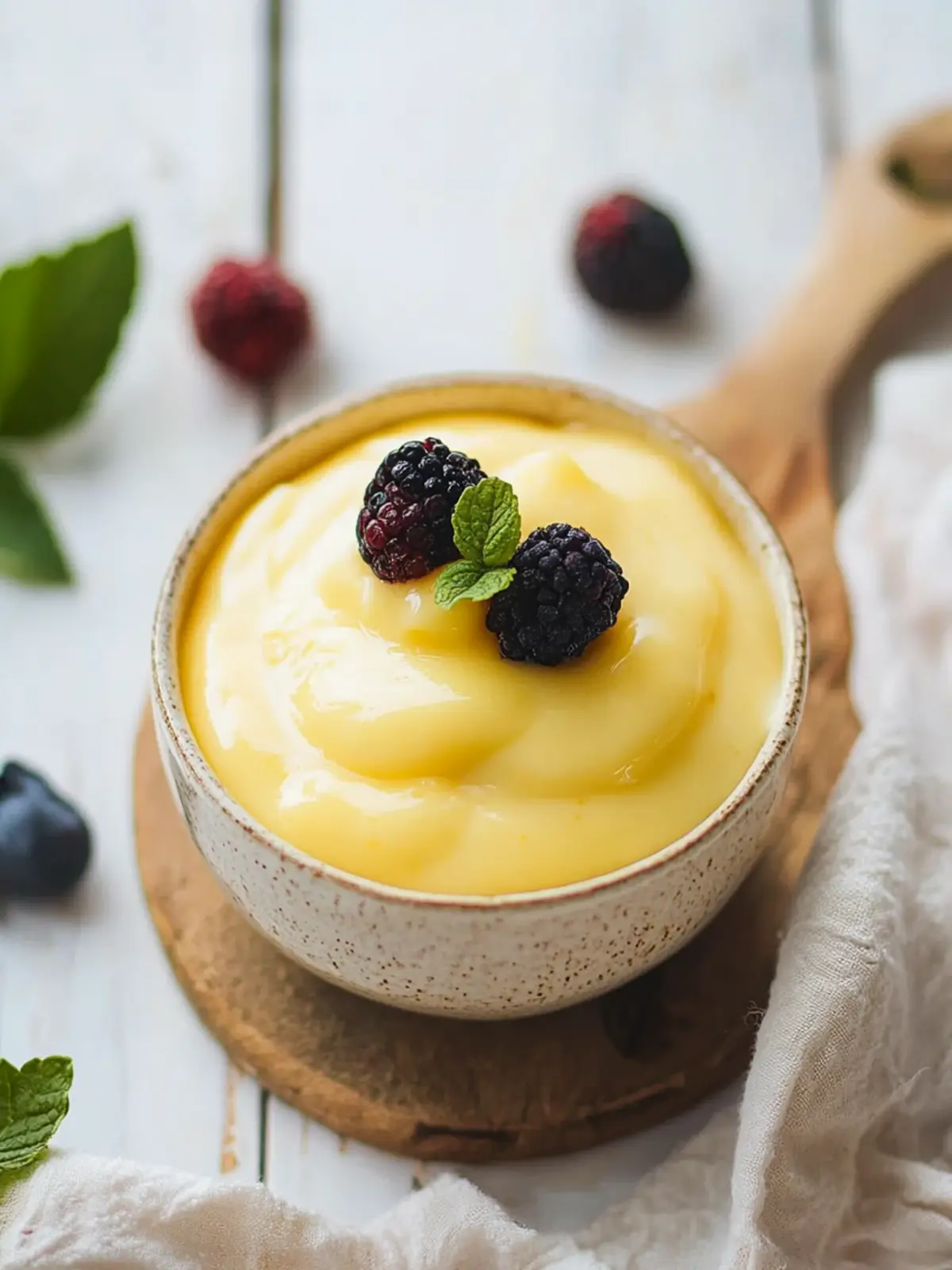
Homemade Custard Variations
Explore delightful twists on this beloved dessert and make the recipe uniquely yours!
-
Lemon Zest: Add freshly grated lemon zest along with a splash of lemon juice for a bright, zesty custard that invigorates your palate. It’s a refreshing change that can uplift your desserts instantly.
-
Banana Bliss: Incorporate a mashed ripe banana into the warm custard after cooking for a creamy, fruity flavor that pairs wonderfully with vanilla.
-
Dairy-Free Delight: Replace whole milk with almond or oat milk to create a smooth, dairy-free custard that doesn’t compromise on richness.
-
Chocolate Dreams: Stir in melted dark chocolate after removing the custard from heat for a luscious chocolate custard that’s perfect for filling tart shells or as a decadent layer in desserts.
-
Spiced Variation: Add a pinch of cinnamon or nutmeg into your custard mixture for a warm spice element that complements the vanilla beautifully. This cozy twist is especially charming during the fall!
-
Matcha Magic: Mix in a teaspoon of matcha powder before cooking for an earthy, vibrant custard that provides a unique flavor and stunning color.
-
Baked Custard: Pour the custard into ramekins and bake in a water bath at 325°F until set for a delightful baked version that’s slightly firmer—perfect for individual servings.
-
Salted Caramel: Swirl in homemade or store-bought salted caramel after your custard has cooled for a sophisticated sweet and salty flavor combination that will impress anyone at your table.
Storage Tips for Homemade Custard Recipe
-
Fridge: Store your homemade custard in an airtight container or covered with plastic wrap directly on the surface to prevent a skin. It will last for up to 3 days.
-
Freezer: For longer storage, you can freeze custard in an airtight container for up to 2 months; however, the texture may change upon thawing, so whisk well before serving.
-
Reheating: Gently reheat custard over low heat on the stovetop, stirring constantly to regain its silky smoothness. Avoid microwaving, as it may cause curdling.
-
Texture Tip: If your custard is too thick after refrigeration, whisk in a little milk until it reaches your desired consistency, keeping the rich essence of your homemade custard intact.
Make Ahead Options
Preparing this homemade custard recipe in advance is a fantastic time-saving strategy for busy cooks! You can make the custard base up to 3 days ahead of time. Simply follow the cooking instructions, allow it to cool to room temperature, then transfer it to an airtight container and refrigerate. For best results, cover the surface with plastic wrap to prevent a skin from forming. When you’re ready to serve, give it a quick whisk to revive its silky texture. This preparation not only saves you time on busy weeknights but also means your creamy masterpiece is just waiting to elevate your desserts with minimal effort!
Expert Tips for Homemade Custard Recipe
-
Temperature Accuracy: Ensure your custard reaches at least 185°F for the perfect thickness; a kitchen thermometer can be your best friend.
-
Constant Stirring: Avoid curdling by stirring continuously while cooking; this will keep your homemade custard smooth and creamy.
-
Strain for Smoothness: If your custard ends up lumpy, strain it while warm through a fine mesh sieve for that irresistibly silky texture.
-
Cover Properly: Avoid a skin forming by pressing plastic wrap directly onto the surface of the custard as it cools in the fridge.
-
Storage Reminder: Store your homemade custard in the fridge for up to three days; give it a gentle whisk before serving for the best consistency.
What to Serve with Homemade Custard Recipe?
The comforting richness of this custard pairs beautifully with a variety of complementary dishes, transforming your dessert into a feast for the senses.
-
Fresh Berries: The tartness of strawberries or raspberries cuts through the creaminess, adding a refreshing burst to your plate.
-
Puff Pastry Shells: Light and flaky, these shells are the perfect vessel for a generous dollop of custard, creating a delightful contrast in textures.
-
Chocolate Cake: The rich, chocolatey flavors provide a decadent pairing, while the custard brings out the cake’s sweet notes for a delightful experience.
-
Baked Apples: Warm baked apples sprinkled with cinnamon are elevated when filled with a spoonful of custard, making for a cozy, heartwarming dessert.
-
Lemon Zest Sauce: Bright, zesty sauce drizzled over custard enhances its flavors, creating a refreshing and tangy note that excites the palate.
-
Shortbread Cookies: The buttery crumble of shortbread cookies complements the velvety custard perfectly, adding a bit of crunch to each bite.
Indulging in a harmonious balance of flavors and textures not only satisfies your taste buds but also creates a memorable dessert experience for all.
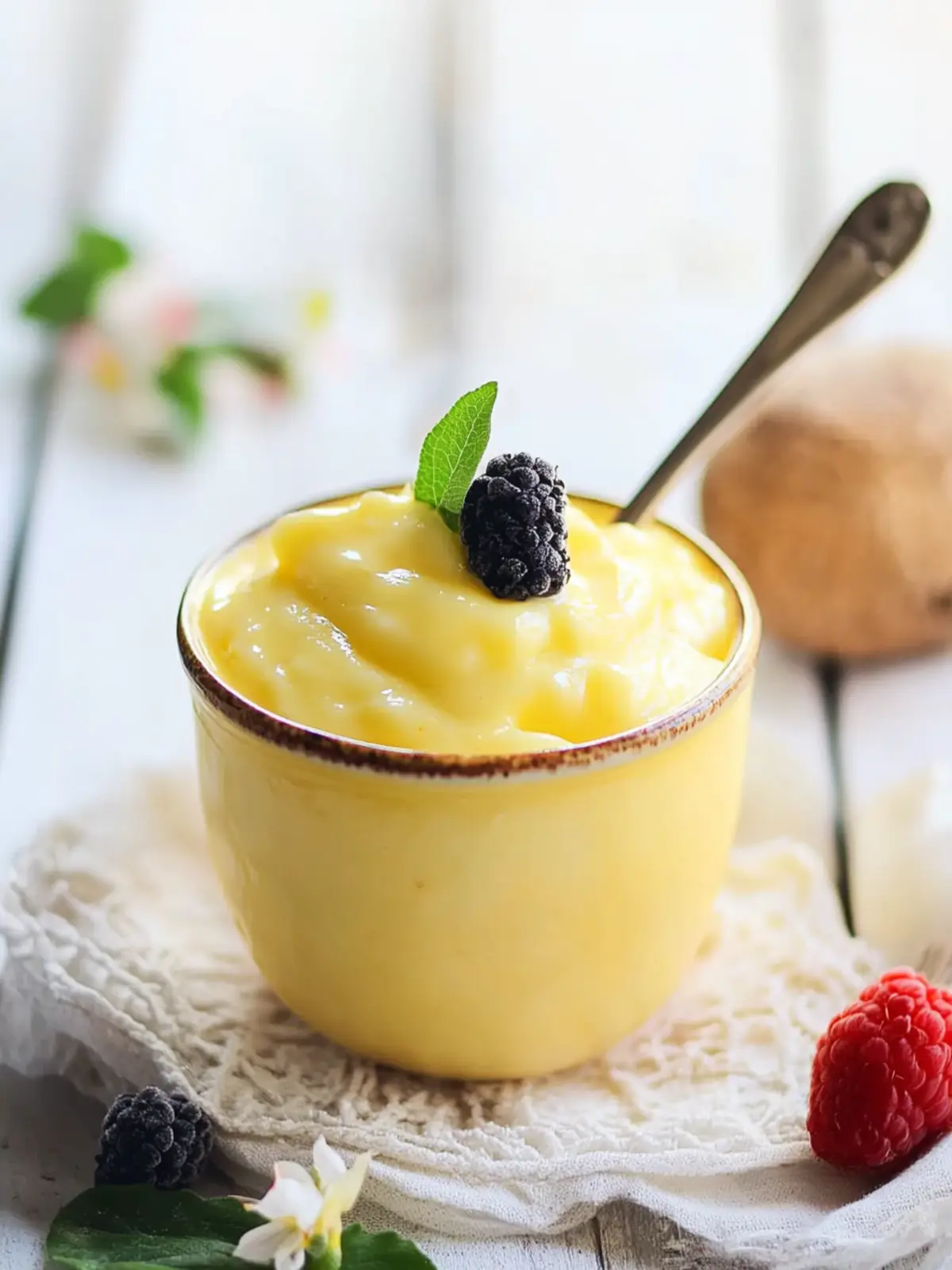
Homemade Custard (Pastry Cream) Recipe FAQs
What can I look for when selecting egg yolks for this recipe?
Absolutely! Fresh, large egg yolks are essential for creating that creamy texture and richness in your homemade custard. Look for eggs that are clean and have intact shells. If possible, use organic or farm-fresh eggs for the best flavor and quality.
How should I store my homemade custard once it’s made?
Certainly! Store your homemade custard in an airtight container or cover it with plastic wrap, pressing it directly onto the surface to prevent a skin. It will stay fresh in the fridge for up to 3 days. Be sure to whisk it gently before serving to restore its silky consistency!
Can I freeze my custard for later use?
Yes, you can! To freeze your homemade custard, let it cool completely, then pour it into an airtight container, leaving some space for expansion. It can be frozen for up to 2 months. To defrost, place it in the refrigerator overnight; when you’re ready to use it, whisk it well as the texture may have changed.
What should I do if my custard curdles during cooking?
Don’t worry, this can happen! If your custard curdles, simply blend it with an immersion blender until smooth. If you prefer, you can also strain it through a fine mesh sieve while it’s still warm to remove lumps. This will help achieve that smooth, velvety texture you desire.
Can I adjust this recipe for dietary restrictions, like gluten-free or dairy-free?
Very much so! For a gluten-free version, ensure that your cornstarch is pure. To make it dairy-free, substitute the whole milk with almond milk or oat milk. Both alternatives work wonderfully, and you won’t have to compromise on flavor! Just remember to adjust any sweeteners as needed for your new base.
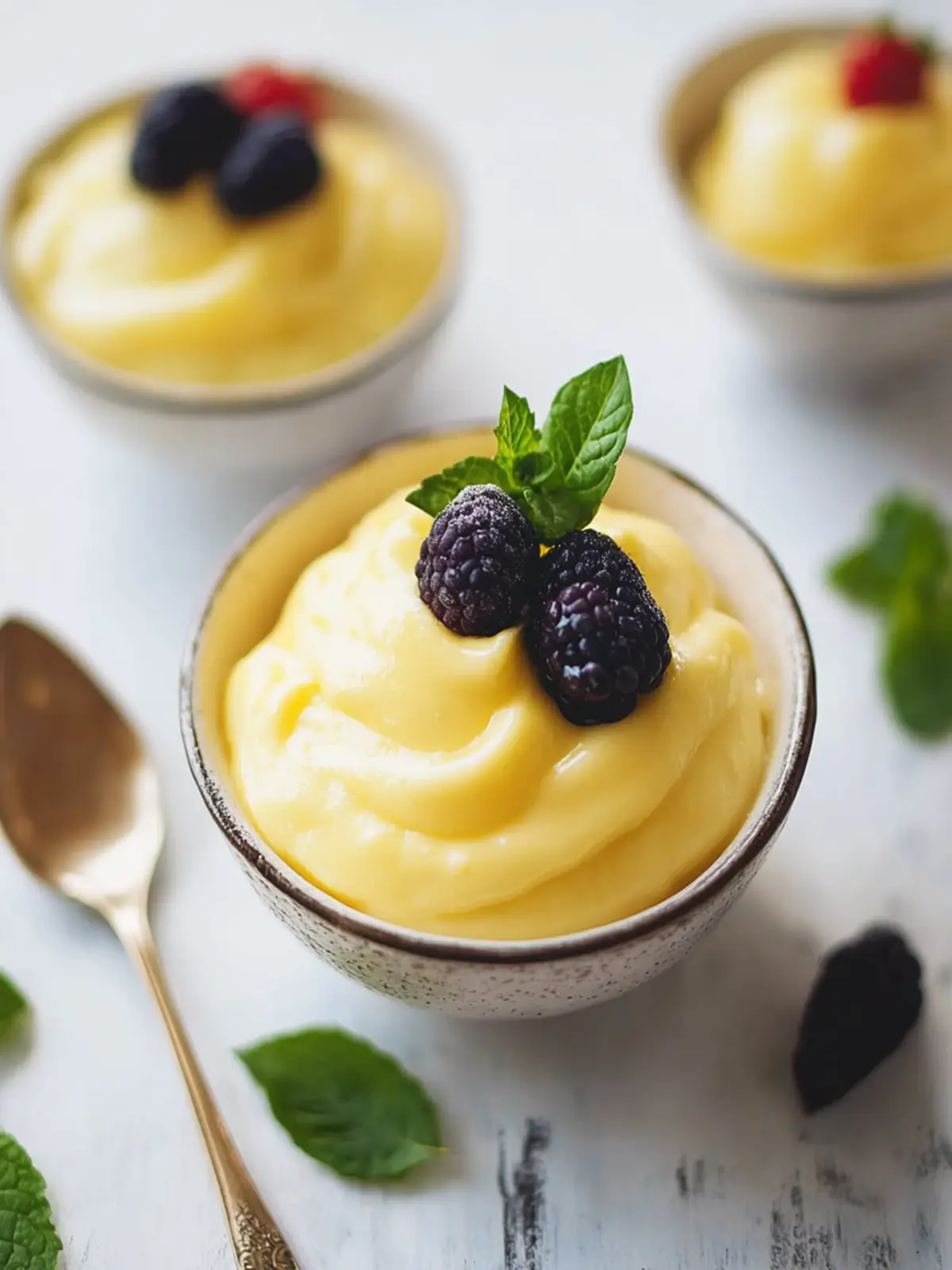
Silky Homemade Custard Recipe for Decadent Desserts
Ingredients
Equipment
Method
- In a medium saucepan, mix whole milk with half of the sugar. Heat gently over medium heat until just below boiling; then reduce to low, allowing the sweetness to dissolve.
- In a separate bowl, whisk together the remaining sugar, cornstarch, and egg yolks until smooth.
- Gradually pour the hot milk mixture into the yolk mixture, whisking constantly to prevent scrambling.
- Return the mixture to the saucepan. Stir continuously over medium heat for 3-5 minutes until thickened and reaching about 185°F.
- Remove from heat and stir in unsalted butter and vanilla extract until well combined.
- Strain the custard through a fine mesh sieve into a bowl if desired; cover surface with plastic wrap to prevent a skin.
- Allow to cool to room temperature before refrigerating until ready to use.