
The moment the savory aroma of simmering beef and onions fills my kitchen, I know I’m in for a treat. This quick and easy Gyudon (Japanese Beef Rice Bowl) is not just a meal; it’s an invitation to enjoy a delightful taste of Japan right at home. Imagine tender, thinly sliced ribeye sautéed in a rich soy-based sauce, topped with a perfectly fried egg and a sprinkle of green onions. It all comes together in just 45 minutes, making it an ideal weeknight dinner for anyone looking to break free from the fast-food routine.
As someone who loves the comforting flavors of Japanese cuisine, whipping up this dish feels like a heartfelt gesture on busy evenings. With just a few simple ingredients, such as sushi rice, dashi broth, and pickled ginger, you’ll be amazed at how easily you can create a bowl that’s both satisfying and packed with flavor. Dive into this recipe with me, and let’s bring some quick culinary magic to your dinner table.
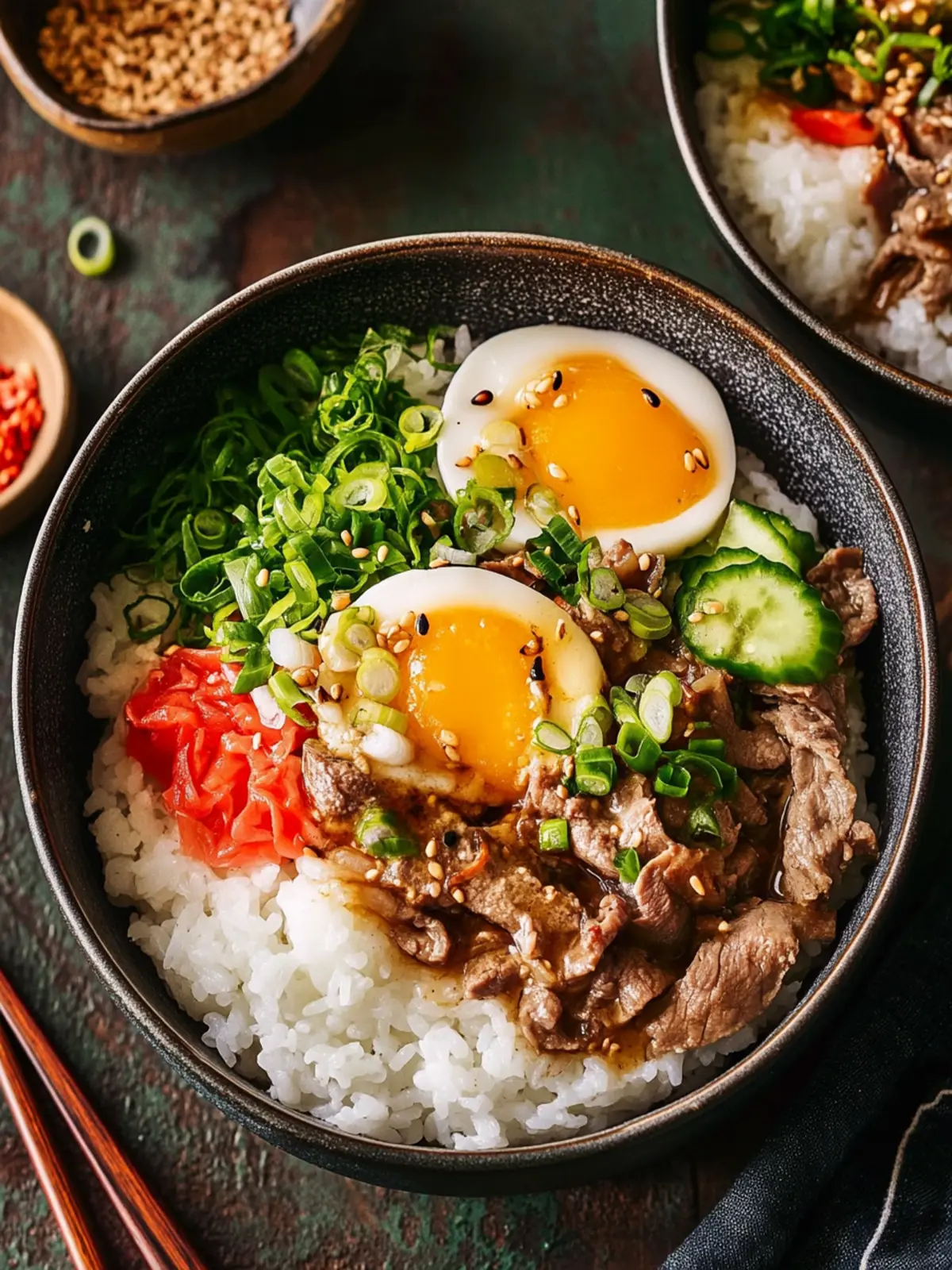
Why is Gyudon (Japanese Beef Rice Bowl) perfect?
Simplicity at Its Finest: This Gyudon recipe requires only a handful of ingredients and minimal preparation, making it accessible for both novice cooks and seasoned chefs alike.
Rich Umami Flavor: With tender beef and sweet onions simmered in a savory soy sauce, every bite is a delightful explosion of taste that will impress your family.
Quick Cooking Time: In just 45 minutes, you’ll have a mouthwatering meal ready, perfect for those busy weeknight dinners when you’re craving comfort food without the hassle.
Versatile and Customizable: Whether you prefer beef, pork, or chicken, this dish easily adapts to your protein preference, ensuring everyone at the table is happy.
Crowd-Pleasing Appeal: Gyudon is sure to become a family favorite, captivating both adults and children alike with its delicious flavor and satisfying presentation. You can also explore more enticing recipes like Japanese Ramen to expand your culinary repertoire!
Gyudon (Japanese Beef Rice Bowl) Ingredients
For the Rice
• Sushi Rice – Stickiness is key for this base; use short-grain rice for the best texture.
For the Beef Mixture
• Sliced Sweet Onion – Adds a subtle sweetness and depth; yellow onions are a suitable substitute.
• Dry Sake – Elevates the umami flavor profile; substitute with white wine or omit for a non-alcoholic option.
• Mirin – Infuses sweetness; you can use a sugar-water mix if mirin is unavailable.
• Reduced Sodium Soy Sauce – Provides umami without being too salty; tamari is a great gluten-free alternative.
• Sugar – Balances the savory elements; brown sugar adds a richer taste.
• Boneless Ribeye Steak – The star protein, tender and juicy; sirloin works well too in this gyudon recipe.
• Dashi Broth – Forms the flavorful base; feel free to use store-bought for convenience.
For Toppings
• Fried Eggs – Adds richness and is a traditional garnish; scrambled eggs can be a quick substitute.
• Benishoga (Pickled Ginger) – Gives a tangy finish; regular pickled ginger can also work in a pinch.
• Green Onions – Fresh and vibrant garnish; use other herbs if needed.
• Toasted Sesame Seeds – A nutty crunch; add them for extra texture, though they are optional.
With these simple ingredients, you’re well on your way to creating the perfect Gyudon (Japanese Beef Rice Bowl) that makes any weeknight feel extra special!
How to Make Gyudon (Japanese Beef Rice Bowl)
-
Cook the Rice: Begin by cooking sushi rice according to the package instructions, ensuring it turns out sticky and fluffy. Once done, set it aside to keep warm.
-
Prepare the Broth: In a Dutch oven, combine dashi broth, sliced sweet onions, dry sake, mirin, reduced sodium soy sauce, and sugar over medium-high heat. Bring this mixture to a rolling boil, inviting those wonderful aromas into your kitchen.
-
Simmer the Onions: Lower the heat and allow the mixture to simmer for 8 minutes. Stir occasionally until the onions are tender and translucent, which should take about 5 minutes.
-
Add the Beef: Once the onions are tender, gently add the thinly sliced boneless ribeye steak into the pot. Cook for about 2-3 minutes, stirring until the beef is just cooked through. Don’t forget to taste and adjust seasoning with more soy sauce if you like.
-
Assemble Your Bowls: To serve, divide the warm sushi rice into bowls. Top each bowl with the savory beef mixture, then finish with a fried egg, pickled ginger, green onions, and toasted sesame seeds for that extra touch of flavor.
Optional: Garnish with extra pickled ginger for a zesty kick.
Exact quantities are listed in the recipe card below.
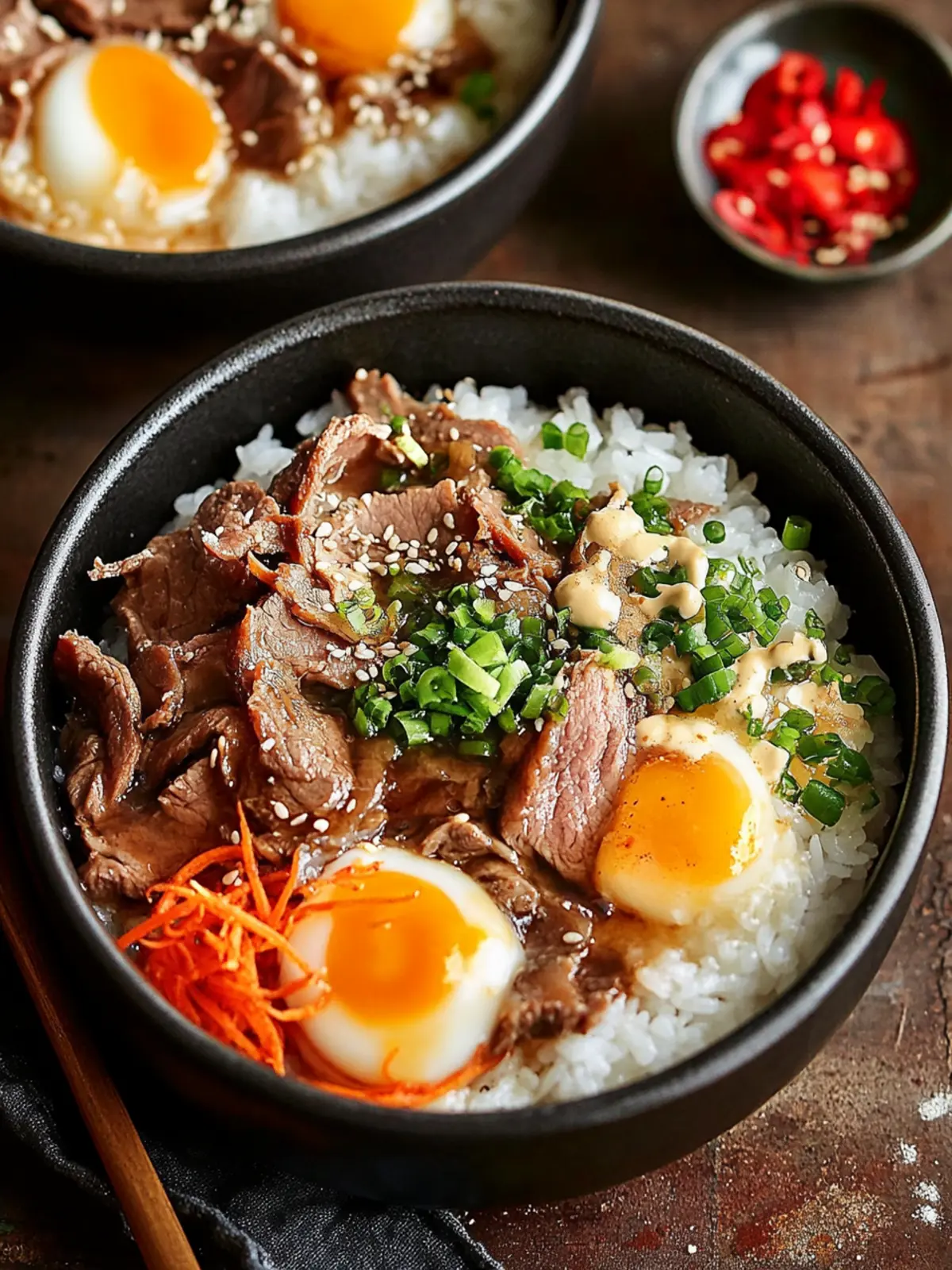
Gyudon (Japanese Beef Rice Bowl) Variations
Feel free to get creative with this dish and adjust it to your taste preferences for a personalized twist!
-
Protein Swap: Use pork or chicken instead of beef for a different flavor profile that still delivers on taste.
-
Vegetable Boost: Add steamed vegetables like bok choy or bell peppers to the beef mixture. This not only adds nutrients but also vibrant color!
-
Dairy-Free: Replace the fried egg with avocado slices or omit it altogether for a lighter, vegan-friendly option.
-
Spice It Up: For those who enjoy a kick, add a dash of chili oil or some sliced jalapeños to the dish.
-
Richer Broth: Switch out the dashi broth for beef broth for a more intense umami flavor in the cooking liquid.
-
Pickled Twist: Try different types of pickled vegetables for a zesty variety; think pickled radishes or cucumbers for added crunch.
-
Texture Variation: Include crispy fried onions or tempura bits on top for extra crunch that complements the tenderness of the beef.
-
Alternative Garnishes: Experiment with fresh herbs like cilantro or basil to elevate the flavor profile and give a fresh finish to your Gyudon.
Expert Tips for Gyudon
-
Slice the Beef Thinly: For the best texture, freeze the ribeye steak for 15-30 minutes before slicing. This makes it easier to achieve those delicate, thin pieces.
-
Sticky Rice is Key: Ensure that your sushi rice is cooked to a sticky consistency, which helps it hold together when served, enhancing the overall enjoyment of your gyudon.
-
Taste as You Go: Flavor profiles can vary, so don’t hesitate to adjust the sweetness or saltiness of the soy sauce mixture to suit your palate. It’s all about making your gyudon perfect!
-
Customize Your Toppings: Get creative! While fried eggs are traditional, consider scrambled eggs or even sautéed vegetables for added nutrition and variety.
-
Use Quality Ingredients: Fresh ingredients will significantly enhance the flavors of your gyudon. Opt for good quality dashi and soy sauce to really capture the essence of this traditional dish.
-
Reheat with Care: If you have leftovers, reheat gently to prevent the beef from overcooking and drying out, keeping that wonderful texture intact for another meal.
What to Serve with Gyudon (Japanese Beef Rice Bowl)?
Enhance your dining experience with delightful pairings that wonderfully complement your gyudon.
-
Miso Soup: A traditional Japanese starter, its savory broth balances the richness of the gyudon, offering warmth and comfort before the main event.
-
Steamed Bok Choy: Light and crunchy, the refreshing green helps cleanse the palate, while adding a vibrant contrast to the dish’s hearty flavors.
-
Namasu (Pickled Daikon): This crisp side adds a tangy zing that brightens the meal, contrasting beautifully with the savory depth of gyudon.
-
Japanese Pickles (Tsukemono): The variety of flavors and textures of pickles provide delightful bursts of taste that play off the umami notes in your gyudon.
-
Sake: A chilled glass of this Japanese rice wine complements the flavors beautifully while enhancing the overall dining experience.
-
Chilled Green Tea: Its refreshing qualities cleanse the palate, balancing the meal’s savory elements with a soothing finish.
-
Fruit Salad: A mix of seasonal fruits adds a sweet and light contrast; consider including juicy melon or tangy citrus for a delightful dessert option.
-
Sesame Cucumber Salad: The crunch of cucumber with a touch of sesame dressing brings a refreshing, slightly nutty element that pairs nicely with the richness of the gyudon.
-
Chocolate Mochi: For dessert, this sweet, chewy treat wraps up the meal in a fun and delectable way, providing a lovely ending to your Japanese feast.
Make Ahead Options
These Gyudon (Japanese Beef Rice Bowl) are perfect for meal prep enthusiasts! You can prepare the sushi rice and the beef mixture up to 24 hours in advance. Simply cook the sushi rice according to package instructions and let it cool, then store it in an airtight container in the refrigerator. For the beef mixture, follow the recipe up to the point of adding the beef, allowing the onion and broth to cool before refrigerating. When you’re ready to serve, reheat the beef mixture gently and quickly cook the thinly sliced beef for about 2-3 minutes until it’s just cooked through. This method not only saves time on busy weeknights but ensures your gyudon remains just as delicious as freshly made!
Storage Tips for Gyudon (Japanese Beef Rice Bowl)
Fridge: Store leftovers in an airtight container for up to 2 days to maintain freshness. Reheat gently in the microwave or on the stovetop to avoid drying out the beef.
Freezer: If you want to keep your gyudon longer, freeze the beef mixture separately from the rice. It can last for about 1 month; thaw in the fridge overnight before reheating.
Reheating: For best results, reheat the gyudon on low heat, adding a splash of water or broth to keep it moist. Serve hot, ensuring the flavors are still vibrant.
Room Temperature: Avoid leaving gyudon out for more than 2 hours to prevent spoilage. Always refrigerate any leftovers promptly.
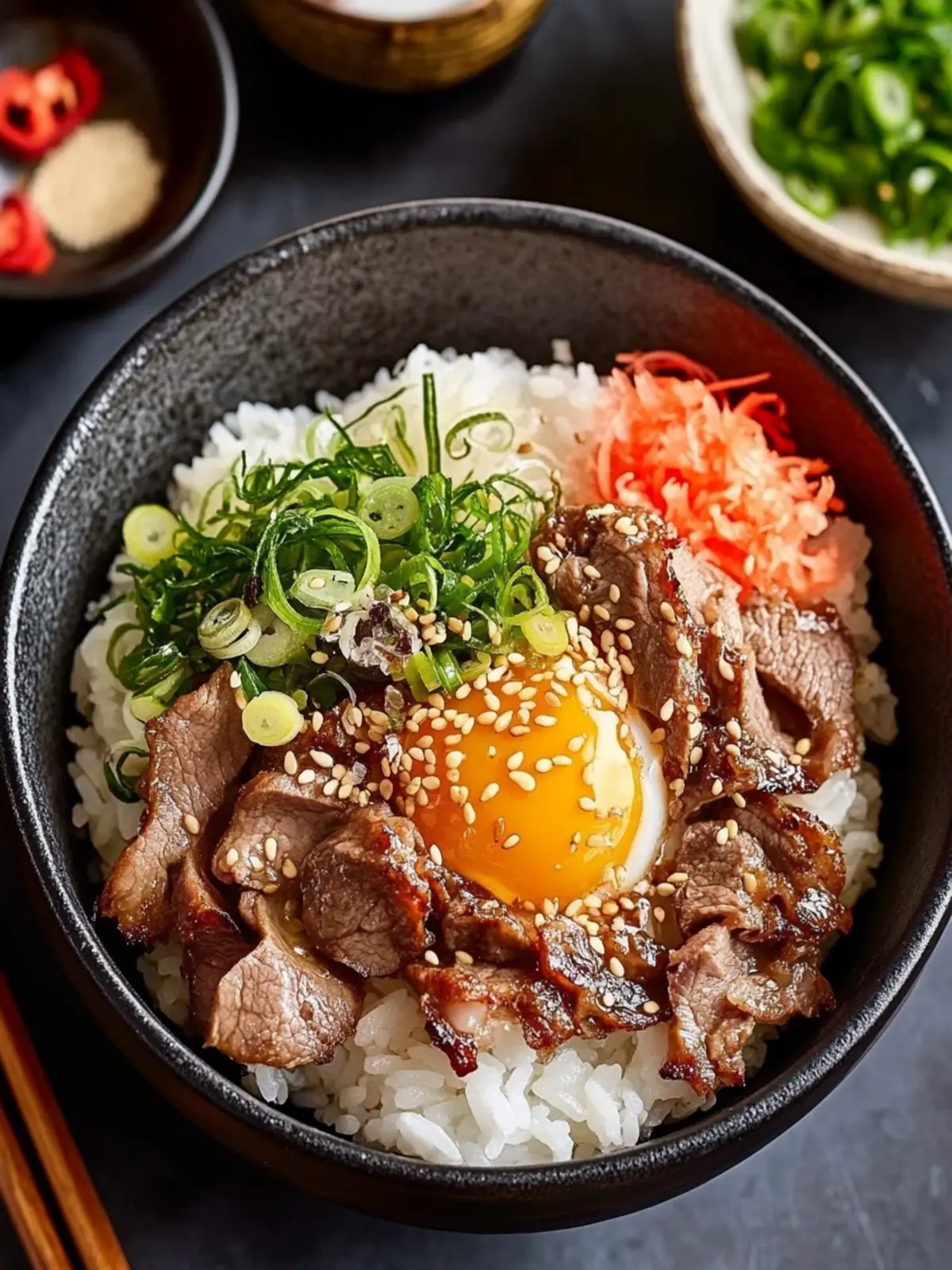
Gyudon (Japanese Beef Rice Bowl) Recipe FAQs
What type of rice should I use for Gyudon?
Absolutely! For Gyudon, sushi rice is the best choice as it provides the ideal sticky texture. I recommend using short-grain rice, which absorbs flavors beautifully. If you can’t find sushi rice, you can substitute with any other short-grain rice, but avoid long-grain varieties that won’t offer the same chewiness.
How do I store leftover Gyudon?
Very simple! Store any leftovers in an airtight container in the fridge for up to 2 days. When you’re ready to enjoy it again, reheat gently either in the microwave or on the stovetop to maintain the juiciness of the beef.
Can I freeze Gyudon?
Yes, you can! To freeze Gyudon, separate the beef mixture from the sushi rice. Place it in a freezer-safe container and it will keep well for about 1 month. When ready to use, thaw it overnight in the fridge and then reheat on low heat. Adding a splash of water or broth can help keep the beef moist while reheating.
What if my beef ends up tough when cooking?
No worries! If that happens, it often means the beef was overcooked. To ensure tenderness next time, slice the ribeye as thinly as possible, and cook it for just 2-3 minutes. Keeping the heat consistent and avoiding overcrowding the pan can also help maintain that lovely texture.
Are there any dietary considerations for Gyudon?
Absolutely! Some people might have allergies to gluten, so it’s best to opt for a reduced sodium soy sauce or tamari, which is gluten-free. Additionally, if you’re cooking for pets, keep in mind that the seasoning in Gyudon (like soy sauce and dashi) isn’t safe for them, so be sure to keep their meals separate.
What is the alternative for dashi broth in Gyudon?
If you’re not able to find dashi broth, using good-quality chicken or vegetable broth works in a pinch! To enhance the flavors, you can add a little bit of soy sauce, kombu, or even a hint of miso paste – just be sure to taste as you adjust!
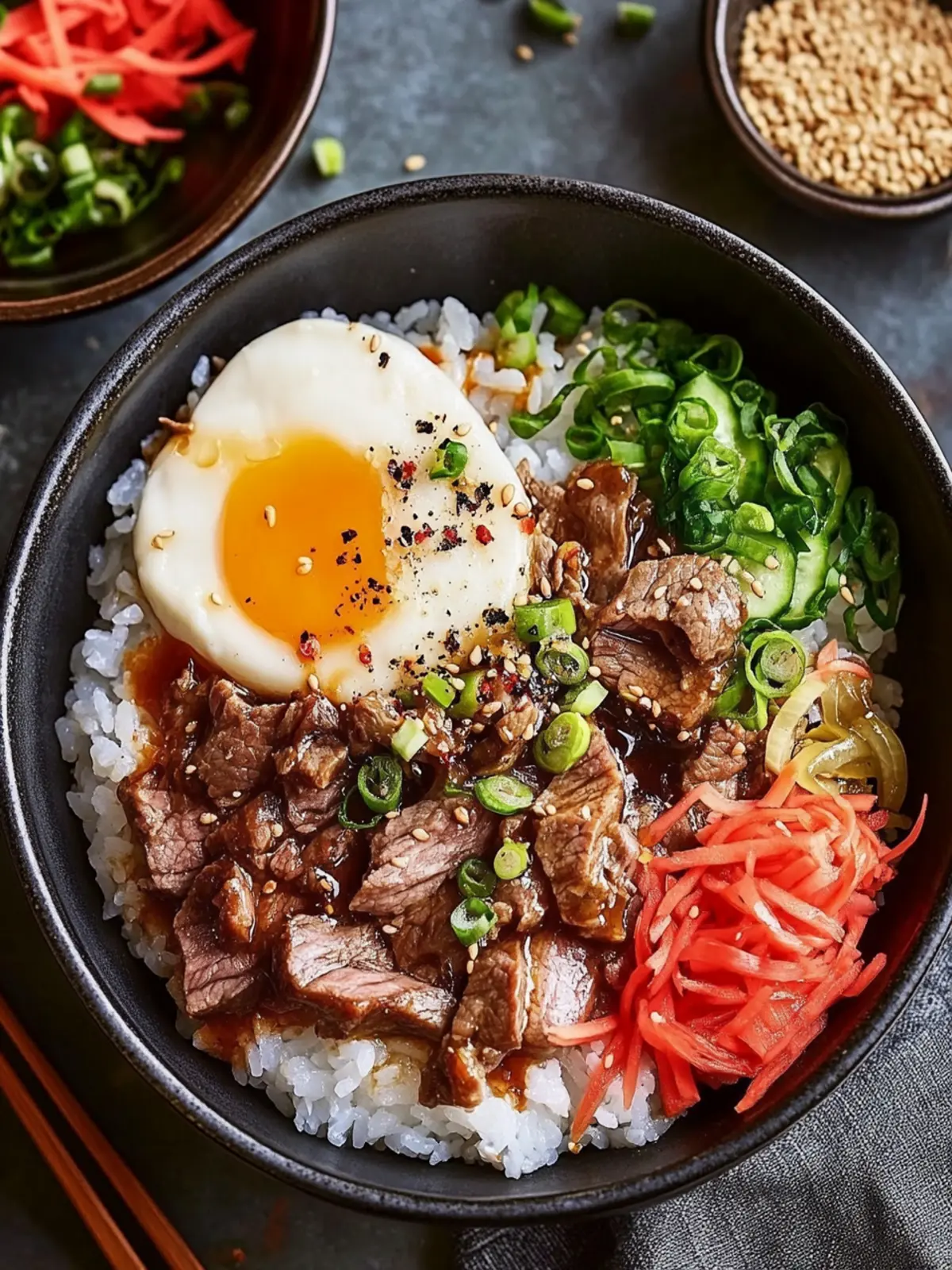
Savory Gyudon: Your Quick & Easy Japanese Beef Rice Bowl
Ingredients
Equipment
Method
- Cook the Rice: Begin by cooking sushi rice according to the package instructions, ensuring it turns out sticky and fluffy. Once done, set it aside to keep warm.
- Prepare the Broth: In a Dutch oven, combine dashi broth, sliced sweet onions, dry sake, mirin, reduced sodium soy sauce, and sugar over medium-high heat. Bring this mixture to a rolling boil.
- Simmer the Onions: Lower the heat and allow the mixture to simmer for 8 minutes until the onions are tender and translucent.
- Add the Beef: Gently add the thinly sliced boneless ribeye steak into the pot. Cook for about 2-3 minutes, stirring until the beef is just cooked through.
- Assemble Your Bowls: Divide the warm sushi rice into bowls. Top each bowl with the savory beef mixture, a fried egg, pickled ginger, green onions, and toasted sesame seeds.